Chestnut orchard: questions to prepare for the site visit
Map, access, management and harvests: how to organize the information to request from the seller and the points to check on the land
To prepare for a site visit to a chestnut orchard, first gather a map of the plot, a description of access and information about its recent management. During the visit, connect each answer to a point on the land or a document. Listing photos help you formulate questions; productivity and the condition of the trees need to be checked on site.
This guide helps you organize your discussions with the seller and a forestry or agronomy professional. It does not describe a specific property: it organizes the information to request when a listing presents land as a chestnut orchard.
Five questions to send before the visit
Ask for answers that refer to the same plot and keep the map, photographs and messages together. A short list makes it easier to identify what is documented and what still needs to be checked:
- Which land is being offered? Request the references that will allow you to locate it on the map, and ask which points will be shown during the site visit.
- How do you get there? Ask for a description of the route from the road to the property, the final stretch on foot and any access routes used for work.
- When was it last maintained? Ask what work was carried out, when and on which part of the chestnut orchard.
- What is known about the trees? Ask whether there are surveys, information about varieties or technical reports, specifying their date and the area they refer to.
- What information is available about the harvest? If quantities are cited, ask which years and areas they relate to and how they were recorded.
Distinguish the listing’s description from how the land is managed
The term “chestnut orchard” is the starting point for the conversation. To understand what caring for it involves, you need to establish how it has been managed and what its current condition is.
CREA distinguishes the management of chestnut orchards from that of coppice stands intended for timber and stresses the need for active care. This provides useful context for asking what work has been carried out; it does not make it possible to classify or assess a particular property from photographs alone.
Send the seller’s description to the professional before the appointment. Ask what they will be able to observe during the visit and what will require a separate assessment. This way, the site visit starts with concrete questions.
Follow the access route and get your bearings on the plot
Agree on a meeting point and ask to be taken along the route actually used to reach the land. Note where the road ends, how the route continues and which parts need clarification.
A photograph taken from the edge does not necessarily show the entire area. If conditions allow, ask to see different parts of the plot and compare them with the map you received. Make a note of what you can identify and what remains uncertain, without treating an observed route as confirmation of access rights or boundaries.
Establish the history of work, trees and harvests
A timeline is more useful than a vague statement that the “land is well maintained.” Ask when it was last cared for, who carried out the work and whether dated photographs or reports of the work are available.
CREA’s Valore in Campo programme addresses chestnut orchard restoration, variety selection, agronomic management and plant health separately. These are distinct areas to cover in your questions to the seller as well: information about a harvest does not replace an assessment of the trees’ condition.
If past harvests are mentioned, note the period and ask whether the figures relate to the entire property or just part of it. Without this context, a number is difficult to interpret. Avoid treating it as a forecast for the next harvest.
Prepare notes after the site visit
Divide your notes into three groups: information provided by the seller, things you observed during the visit and outstanding checks. For each item, keep the relevant reference: a document, photograph, point on the map or question to follow up on.
For example, “the seller says the land was cleared recently” and “a report of the work is available” are different pieces of information. Keeping them separate helps identify the next step without giving the impression that the visit was more conclusive than it was.
Before arranging a second meeting, send the outstanding questions. If a technical assessment is needed, clarify what issue it should address and what materials are already available. This guide does not determine the value of the land, the work permitted there or its plant health status.
Frequently asked questions
Can I assess a chestnut orchard from photos alone?
Images can help you prepare for the visit. For this process, you will also need to identify the plot, understand how to access it and obtain information about its management.
Does a past harvest indicate how much it will produce in the future?
Here, it is treated as historical information to be clarified in terms of period, area and recording method, not as a promise of yield.
What is a useful outcome of the first visit?
A set of notes distinguishing what was stated, what you observed and which questions remain unanswered. You can use this list to organize any further assessments.
To start the discussion, you can browse the listings on OldHouse24 and ask the seller to confirm the availability and information about the land that interests you. Bring your list of questions to the site visit, without applying the features observed at one property to another listing.
Stock photograph: chestnut orchard in Castel del Rio. Photo by Stefania, via Wikimedia Commons, licensed under CC BY-SA 3.0, reproduced without modification. It does not depict land offered in this article.
From the magazine
Read also
 Notizia
Moto Guzzi V7 Sport: the 1971 750 and the modern 850
In brief. If you’re looking for the collectible V7 Sport from the 1970s, the reference is the 750 introduced in 1971. If you’re reading about the Sport introduced in 2025, it’s a m...
 Notizia
Alfa Romeo Alfetta GTV V6: a rare heir to Sandro Munari’s Safari Rally resurfaces at Milano Autoclassica
A piece of Italian motoring history arrives in MilanNot every classic car tells a story. Some preserve an authentic chapter of international motorsport, shaped by great drivers, le...
 Notizia
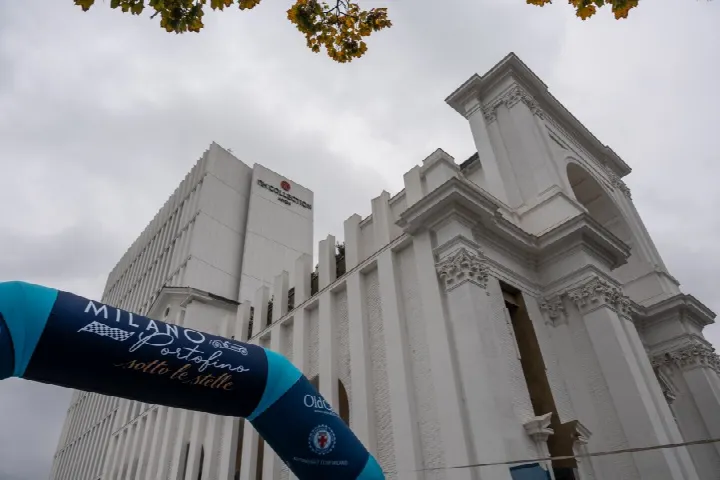
Milano Portofino Under the Stars 2026: the start at NH Collection Milano CityLife, among classic cars and cutting-edge architecture
Milan, November 7, 2026 – Past meets future in the heart of CityLife. The first edition of Milano Portofino Under the Stars officially set off from the elegant setting of NH Collec...
Dal network
In vetrina
Selezione premium · OldHouse24